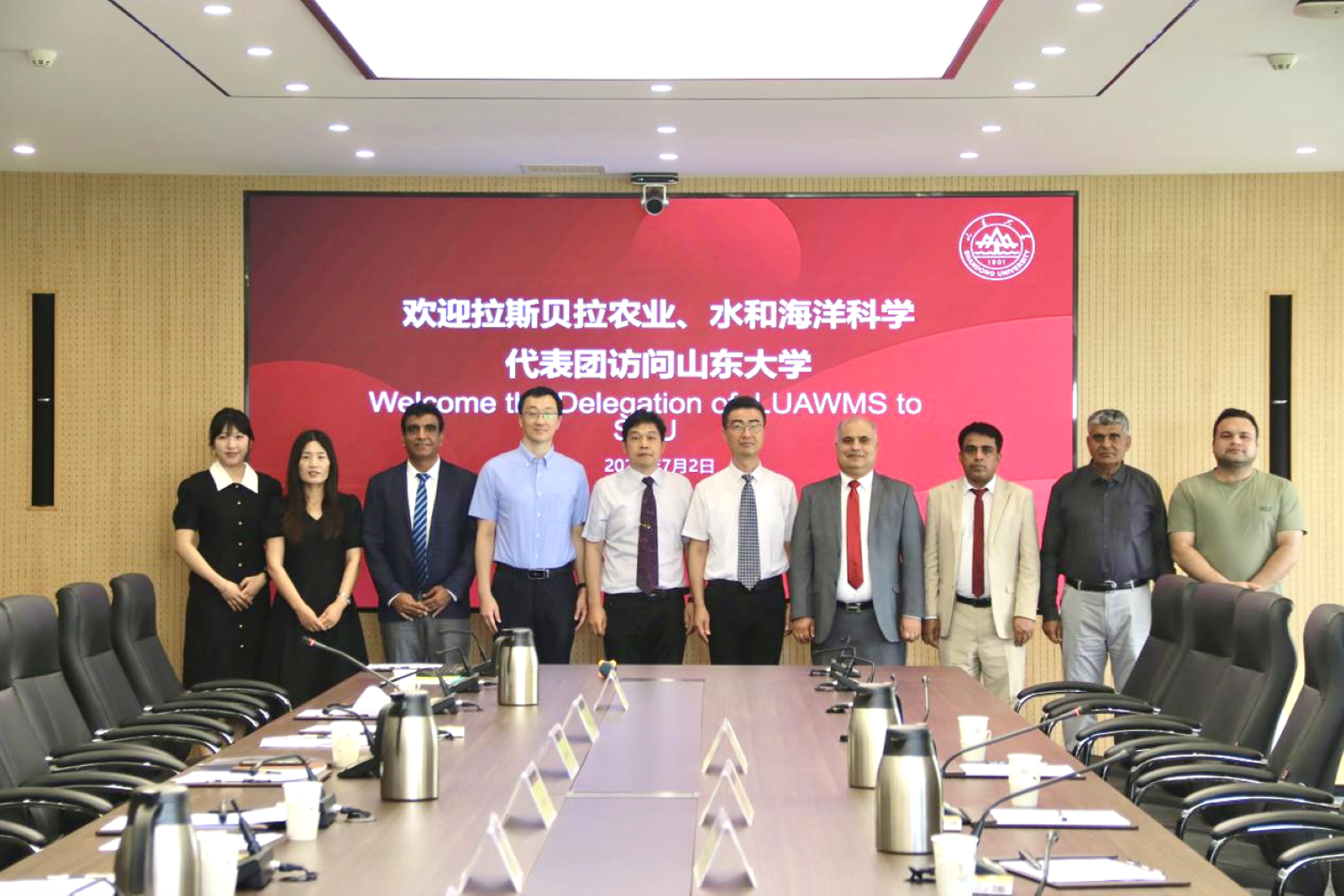
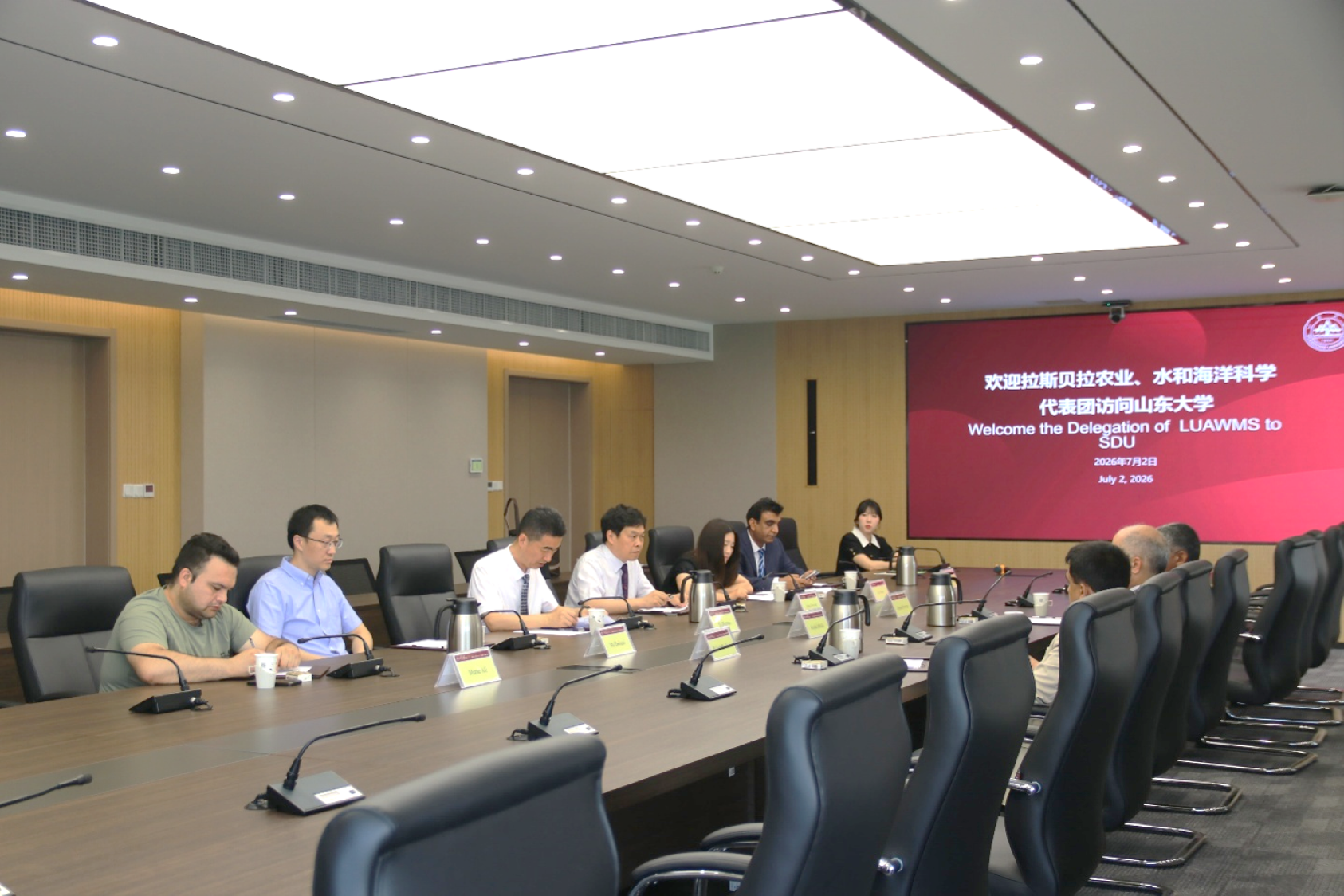
A delegation from Lasbela University of Agriculture, Water and Marine Sciences (LUAWMS), Pakistan, led by Prof. Dr. Abdul Malik, Vice Chancellor, visited the Marine College of Shandong University, Weihai, China, with the aim of strengthening academic, scientific, and research collaboration between the two institutions.
The LUAWMS delegation comprised Dr. Balach Rasheed, Registrar, and Dr. Ahmed Nawaz, Dean. The delegation received a warm welcome from Prof. Yu Zhentao, Party Secretary, and Prof. Jiang Zhaoyang, Vice Dean, along with Prof. Liu Chunli, Prof. Mu Dashuai, Dr. Zhang Mengyuan, and Dr. Muhsan Ali Kalhoro.
Sharing Academic and Research Expertise
During the meeting, representatives of both institutions presented their academic profiles, research strengths, areas of expertise, and future development plans. The exchange provided an opportunity to understand the academic priorities and research capabilities of both universities while identifying areas with strong potential for collaboration.
The discussions emphasized the importance of strengthening institutional links and creating sustainable mechanisms for researchers, faculty members, and students to work together on issues of shared scientific and academic interest.
Collaboration in Marine Sciences
Particular attention was given to expanding cooperation in key areas of marine science and environmental research, including marine ecological restoration, marine environmental protection, artificial reefs, and other emerging fields of mutual interest.
Both sides recognized the importance of collaborative approaches to marine ecosystem conservation and sustainable development. The proposed areas of cooperation are expected to provide opportunities for joint research, knowledge sharing, and the development of innovative scientific solutions to marine and environmental challenges.
Faculty and Student Exchange
The two institutions agreed to promote faculty and student exchange programmes as part of their broader academic cooperation. These exchanges will provide valuable opportunities for students, researchers, and faculty members to gain international exposure, share expertise, and develop stronger academic networks.
Increased academic mobility will also support the exchange of ideas, research methodologies, and experiences between the two institutions, further strengthening their academic relationship.
Joint Research and Publications
Both institutions expressed their commitment to undertaking joint research projects and strengthening scientific collaboration through collaborative publications and scientific exchange.
Through joint research initiatives, researchers from LUAWMS and Shandong University will have opportunities to collaborate on marine science and environmental research while contributing to the advancement of knowledge in areas of regional and global significance.
Exploring Scholarship Opportunities
An important aspect of the discussions was the shared commitment to exploring scholarship opportunities for LUAWMS students. These opportunities would enable deserving students to pursue higher studies and research at Shandong University in the future.
The initiative has the potential to enhance academic capacity, provide international research exposure, and support the professional development of LUAWMS students in marine sciences and related disciplines.
Towards a Long-Term Strategic Partnership
The meeting concluded with both institutions reaffirming their commitment to establishing a long-term strategic partnership focused on academic excellence, research innovation, knowledge exchange, and sustainable international cooperation.
The collaboration between LUAWMS and the Marine College of Shandong University represents an important opportunity to strengthen academic and scientific ties between Pakistan and China, particularly in the field of marine sciences.
Both sides expressed confidence that continued cooperation will lead to meaningful academic exchanges, collaborative research projects, enhanced student opportunities, and stronger institutional relationships in the years ahead.
The collaboration between LUAWMS and the Marine College of Shandong University provides a strong foundation for advancing marine science, research, student mobility, and long-term academic cooperation between Pakistan and China.
Pakistan